

Desktop Application
Recall — Deterministic Study App
A minimal, local Quizlet-style study app built on Tauri. Import your notes, auto-generate flashcards, study offline with four quiz modes. Everything runs on your machine.
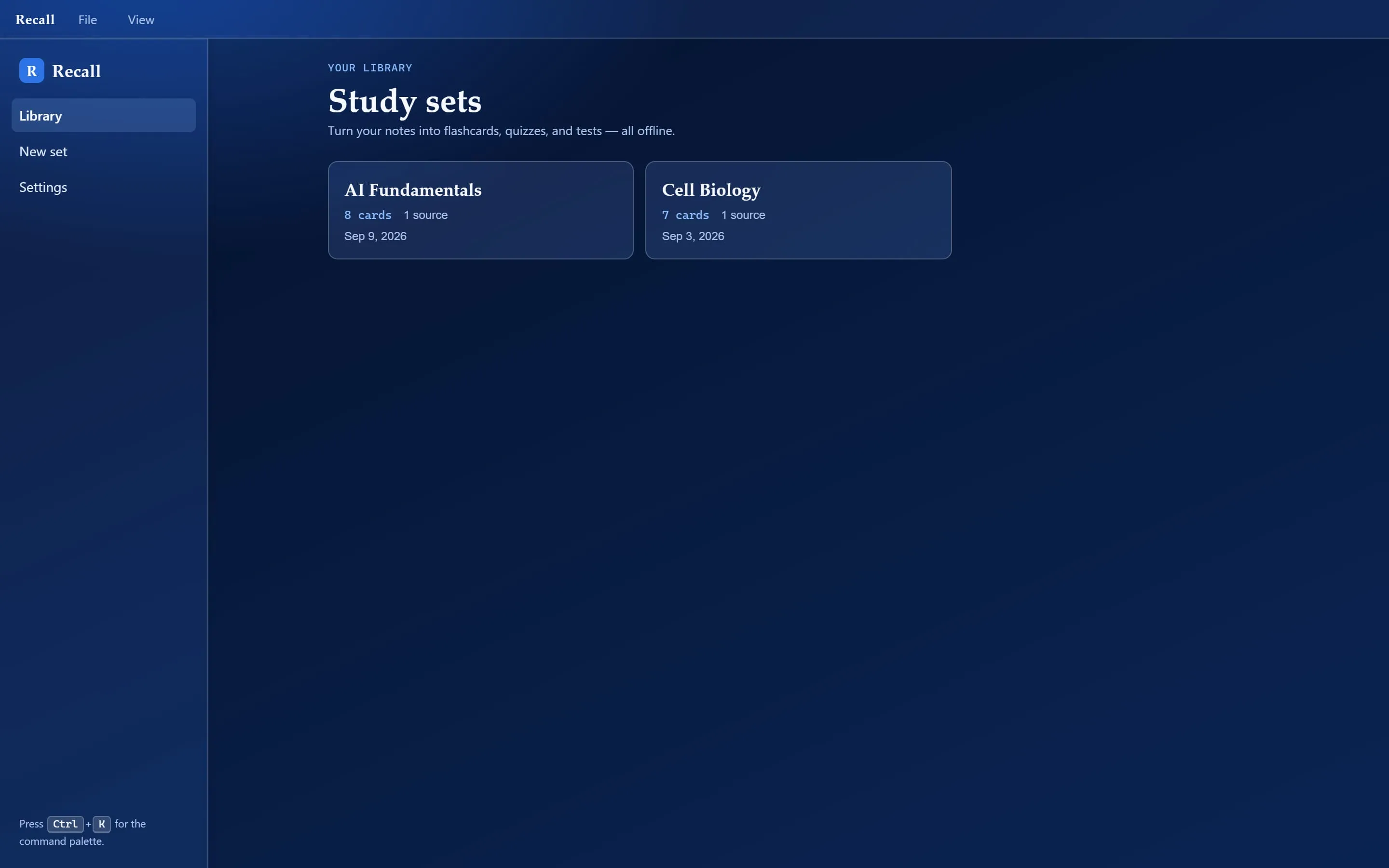
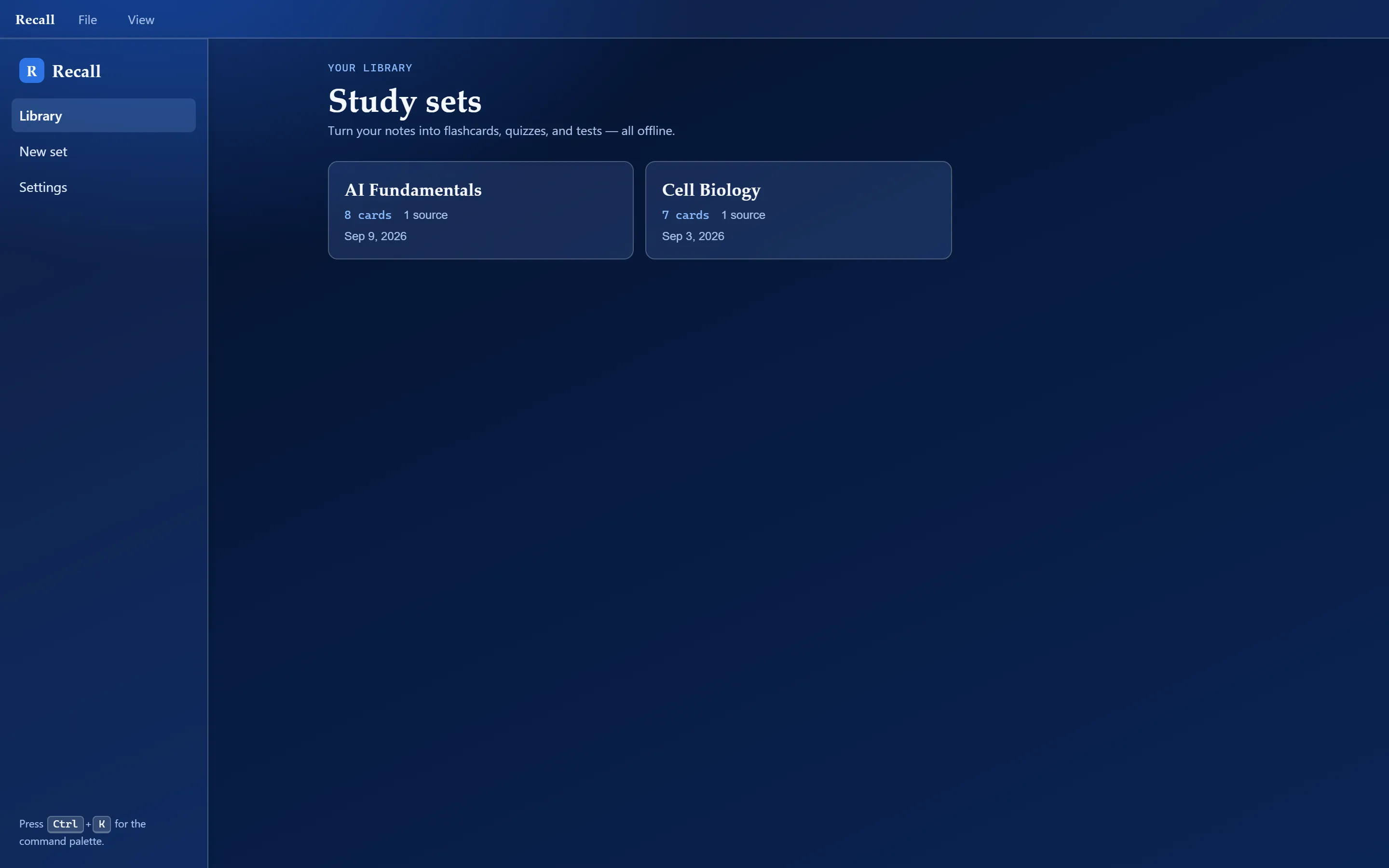
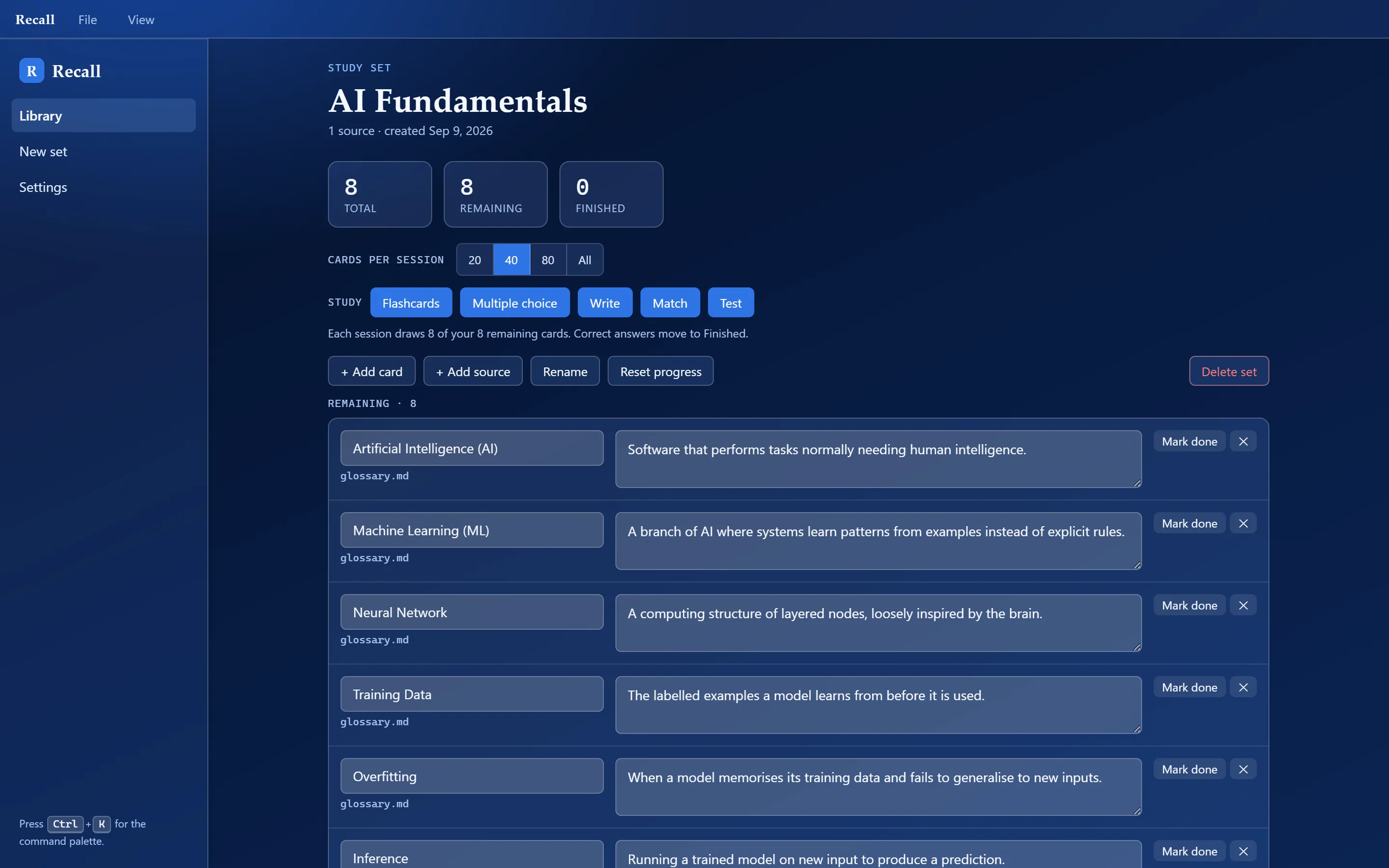
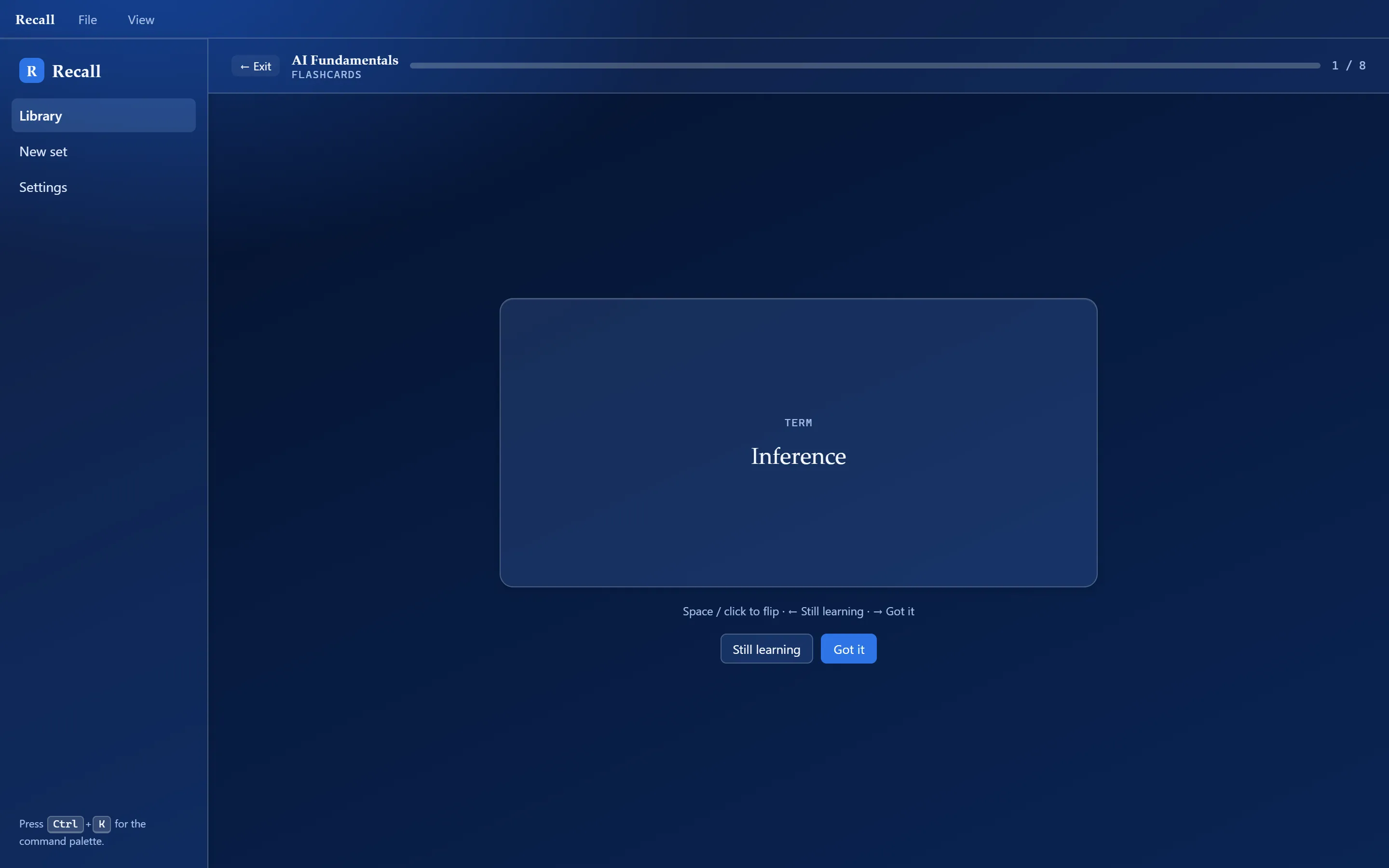
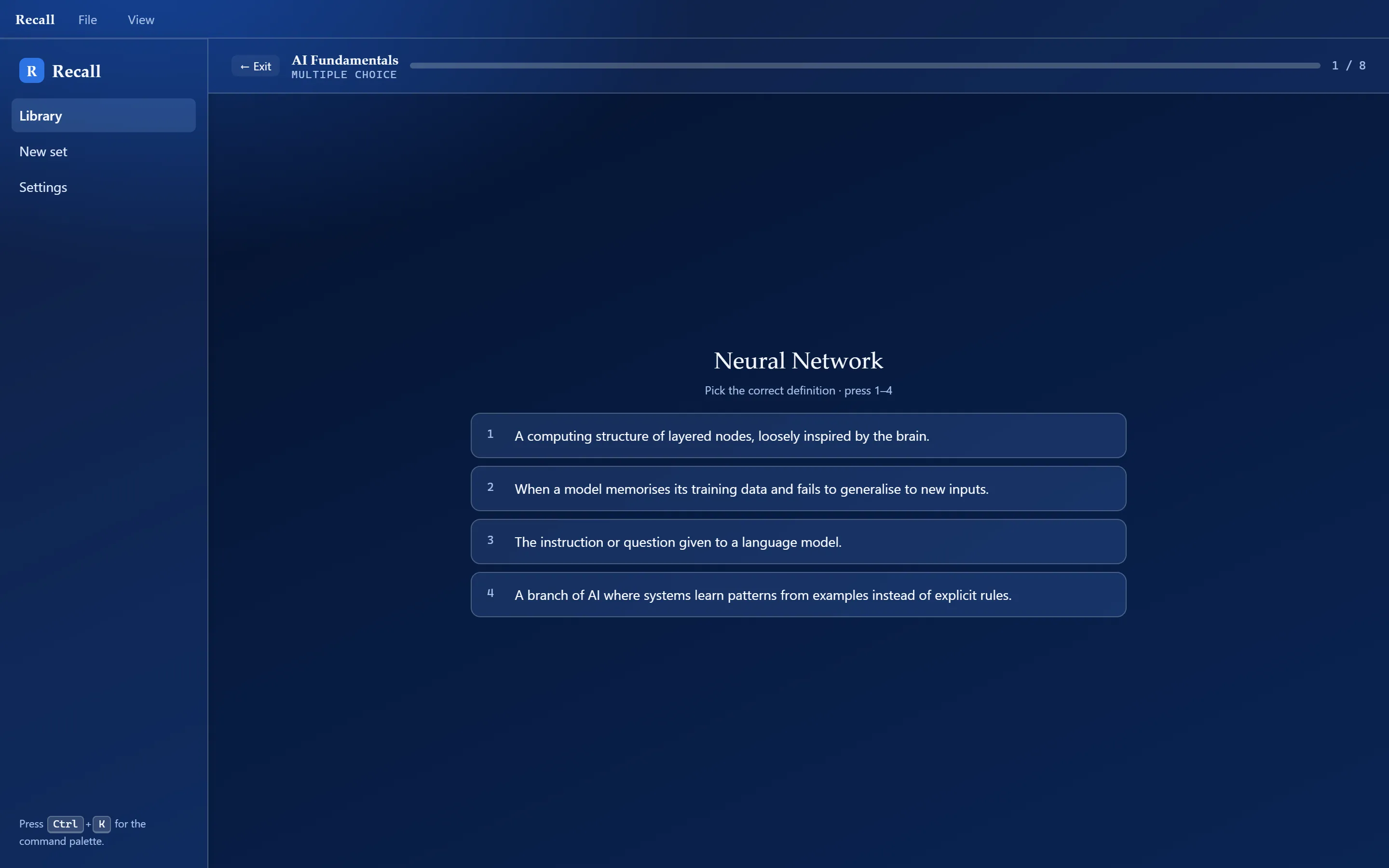
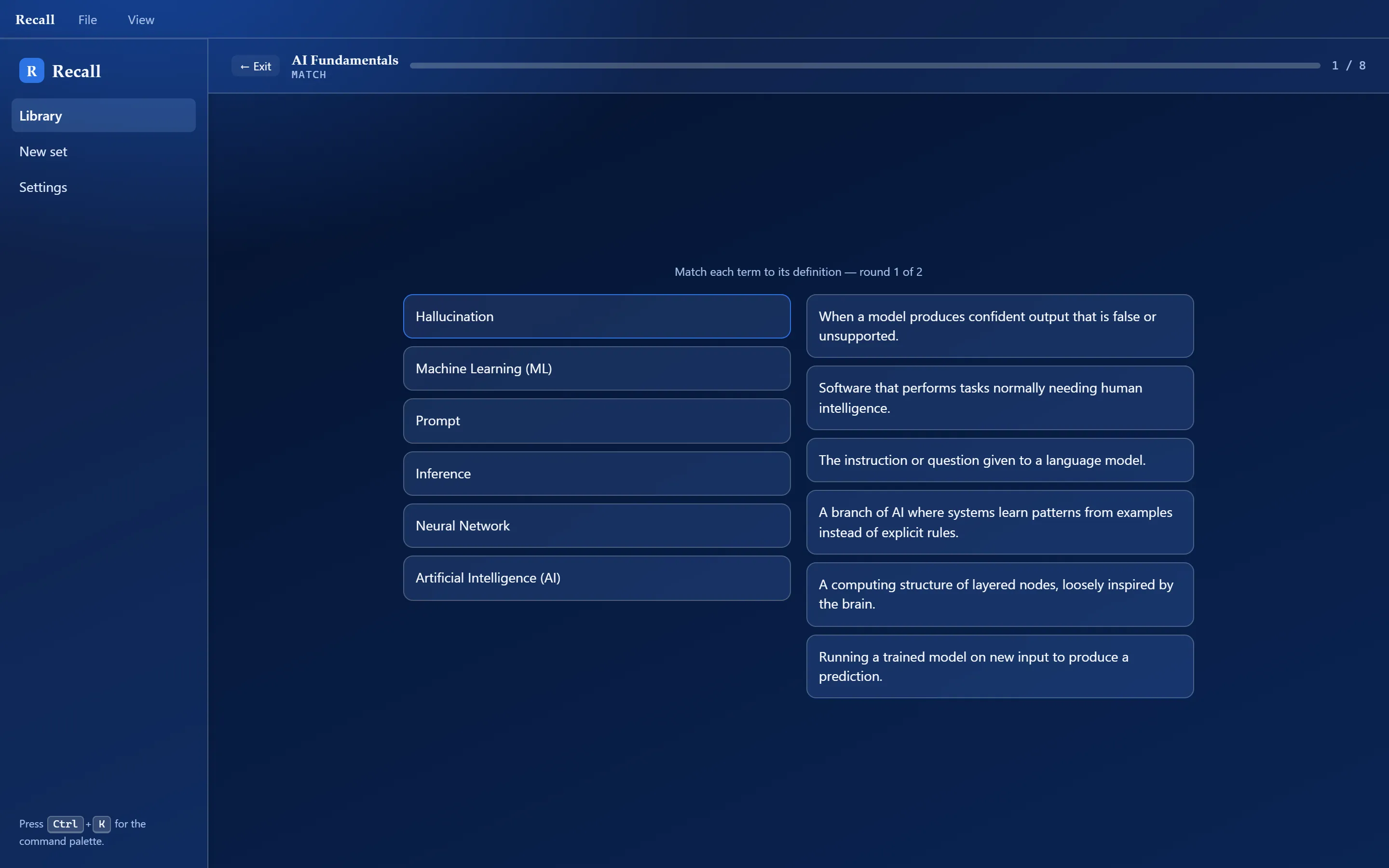
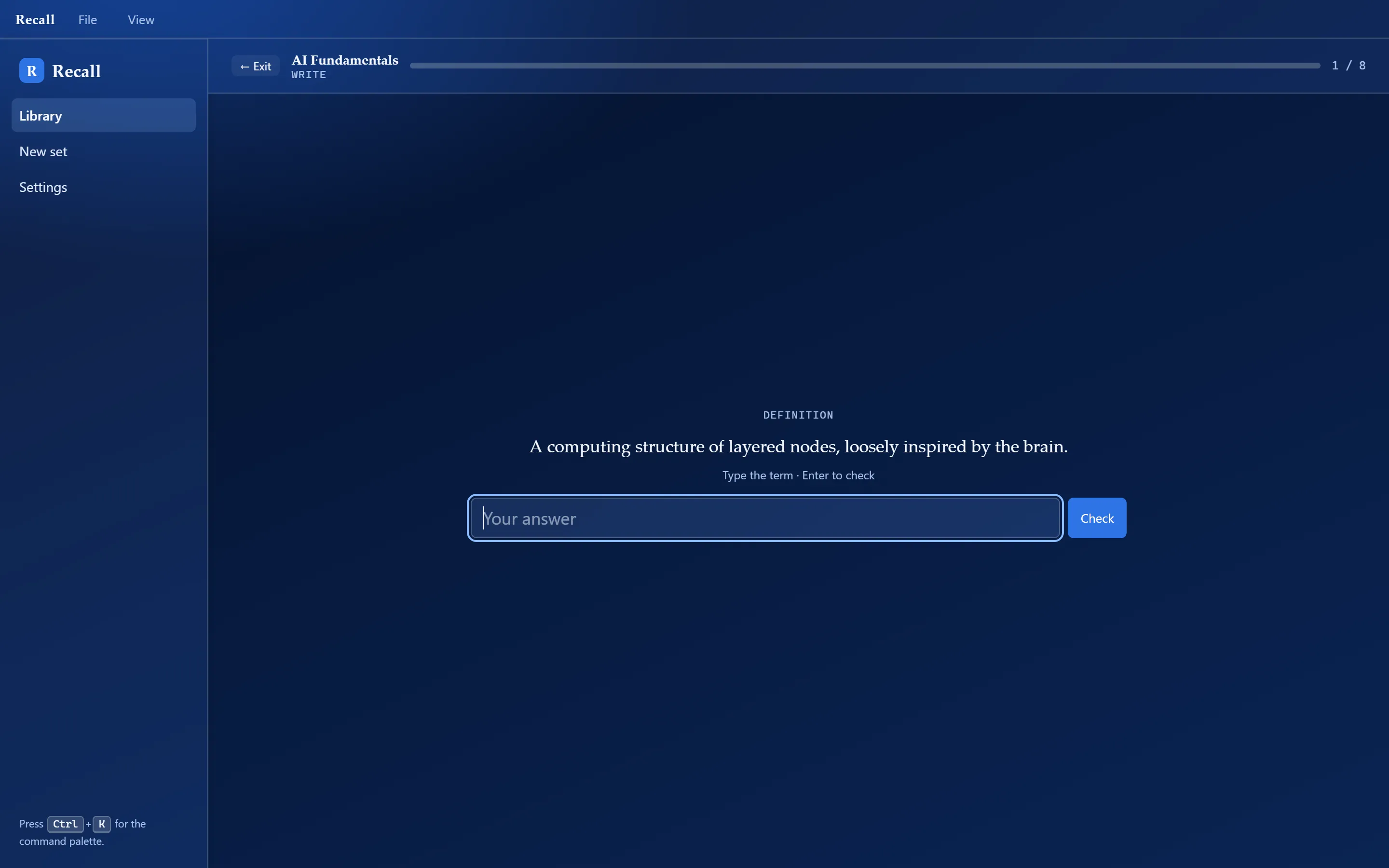
1 / 6
Students and professionals waste time and money on cloud study platforms that require accounts, track every quiz, and charge per session. Recall takes the opposite approach: a single-user desktop app that is fast, deterministic, and completely offline.
What we did
We built Recall on Tauri — a Rust core wrapped in a lightweight TypeScript UI. The app boots in under a second and idles around 40 MB (no bundled Chromium). Users import notes as .txt, .md, or .pdf files; Recall extracts and deduplicates the content, then drafts flashcard sets two ways:
- Deterministic (no AI): rule-based extraction of glossary entries, headings, and copula sentences. Fast and reproducible.
- AI-assisted (optional Ollama): if a local Ollama server is running, Recall can send your notes to it and generate cleaner cards from slide decks and PDFs — all offline, no tokens, no API keys.
Four study modes — Flashcards, Multiple Choice, Write (fuzzy-graded), and Match — plus a timed Test. Everything is keyboard-first: numbers pick MC answers, Space flips cards, Enter submits writes.
The outcome
Recall users study on their own terms, own their data (plain JSON under the app folder), and never worry about subscription churn. The app powers through three-hundred-page lecture decks in minutes and produces study sets that students actually use — because they edited them themselves before studying.